It is slightly strange to think that Imperial Teas might not exist at all were it not for four packets of flavoured tea, a group of German exchange teachers and my other life as a musician.
But that is more or less what happened.
Back in the mid-1980s I was playing in a band called Eden. We were eventually signed to Polydor Records and had the extraordinary experience of recording in some of the major studios of the time.
Rock ’n’ Roll and Brew
Who’d have thought rock ’n’ roll and tea would go together?
Certainly not me at the time. I was far more preoccupied with music and making records. Tea was something I enjoyed and, to be honest, I was more often found in a tea house or cafe than a bar, but I had no idea it was quietly waiting in the wings to become the other great obsession of my working life.
Strangely enough, it was while working in a restaurant to support myself as a musician, before the record deal came along, that the two worlds collided. One day a lovely group of German exchange teachers came in. I prepared tea for them in a particular way which apparently impressed them. We became friends and, when they left for home a year later, they bought me four flavoured teas as a parting gift.
Vanilla. Strawberry. Apricot. Cherry.
I absolutely loved them.
Not just because they were flavoured, but because of what happened when those flavours were combined with tea. This wasn't simply hot water that tasted of strawberry or vanilla. There was still proper black tea underneath it — its body, tannin, warmth and depth — but with another layer of aroma and flavour sitting over and amongst it.
It started me wondering what else tea could be.
And then I ran out.
The elusive search for more
Trying to replace those teas proved considerably more difficult than I had expected.
Today we are used to being able to search for almost anything and have it arrive at the door a few days later. In the 1980s things were rather different.
I searched for flavoured teas like the ones I'd been given and simply couldn't find what I wanted.
That elusive chase helped awaken my interest in tea generally. One thing led to another, the subject became increasingly fascinating and, ultimately, Imperial Teas opened in Lincoln in 1991.
There is a rather pleasing irony to what happened next.
In the end, the only reliable way I could get the sort of flavoured teas I wanted was to make them myself.
More than thirty years later, we still do.
What is a flavoured tea?
There is nothing particularly new or peculiar about adding another aroma to tea.
The most famous flavoured tea in the world is almost certainly Earl Grey: tea combined with the distinctive citrus fragrance of bergamot.
It is a beautifully simple idea.
Take tea, which already contains an enormous range of aromas of its own, and introduce another flavour that complements it.
When it works well, neither should completely obliterate the other.
The tea matters.
The flavour matters.
And the relationship between the two matters.
That is particularly important to us because we don't regard the tea underneath as merely something on which to carry flavouring. If you begin with an indifferent black tea, adding strawberry, vanilla or bergamot doesn't magically turn it into a fine one.
We choose the teas we use as carefully as we choose the flavours.
More than just the taste
One of the things I love about flavoured tea is the sensory experience before you've even taken a sip.
Open a packet of our Vanilla Black Tea and the aroma arrives before the kettle has boiled.
Apricot has that wonderful ripe, sweet, slightly tart fragrance.
Cherry can be rich and almost almond-like.
Strawberry brings something bright, familiar and immediately inviting.
And bergamot has that unmistakable perfumed citrus character that makes Earl Grey quite unlike anything else.
Then add hot water.
Heat releases those volatile aromas and carries them upwards with the steam, while the black tea itself develops underneath.
That combination of fragrance and flavour is one of the reasons flavoured tea can be so satisfying. You aren't merely tasting it. Much of what we call flavour is aroma, and a steaming cup of tea is a rather good delivery system for it.
It can take a familiar cup of black tea and move it somewhere completely different.
Traditional tea or flavoured tea? Fortunately, we don't have to choose.
I have spent much of my working life tasting some of the finest teas produced in the world.
A great Darjeeling, Assam, Chinese black tea or Taiwanese oolong doesn't require anything adding to it. Part of the fascination is discovering the extraordinary flavours that the tea plant, its terroir and the skill of the tea maker can produce entirely on their own.
I would never want to disguise that.
But that doesn't mean there isn't room for flavoured tea.
There is sometimes a slightly po-faced attitude towards tea which suggests that enjoying it in its purest form is somehow more sophisticated.
I don't subscribe to it.
I can be fascinated by the extraordinary muscatel character of a fine second-flush Darjeeling one day and thoroughly enjoy a mug of Vanilla Black Tea the next.
Both have their place.
Tea should ultimately give pleasure, not provide an examination you have to pass.
Why our flavoured teas look a little different now
Regular customers may notice that some of our flavoured black teas now look rather simpler in the packet than they once did.
There is a very deliberate reason for this.
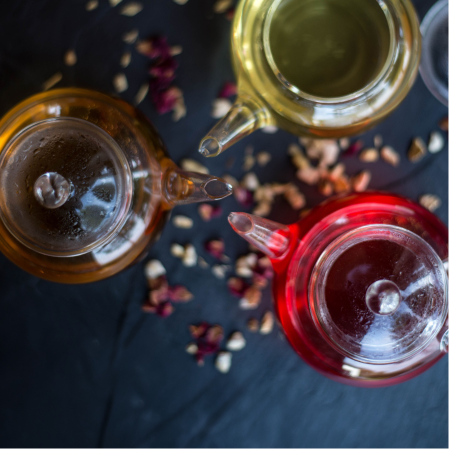
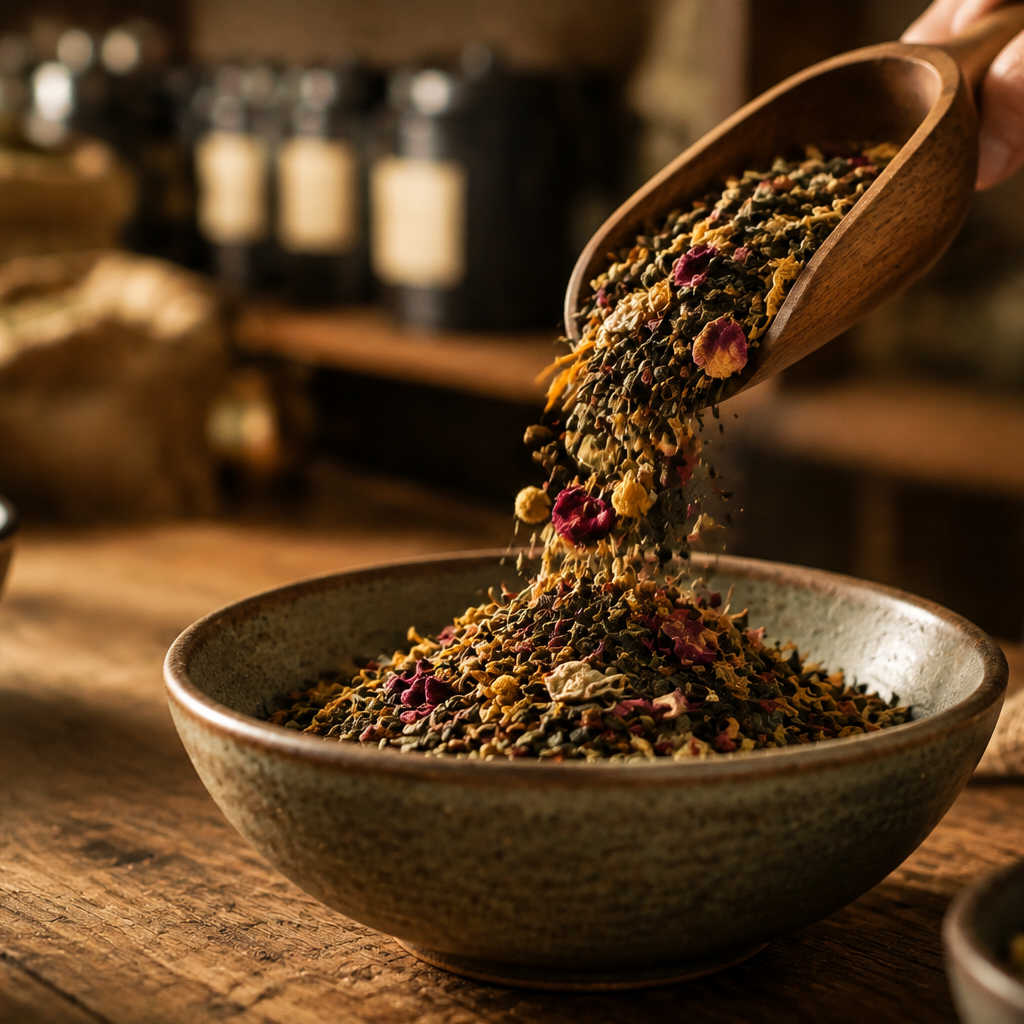
Over the years it became common to add pieces of dried fruit, flower petals and other colourful ingredients to flavoured teas. Sometimes those ingredients contribute to the flavour and, where they genuinely do, they still have a purpose.
But quite often their role was primarily visual.
They made the dry tea look pretty.
A scattering of brightly coloured petals might suggest strawberry, for example, despite having virtually nothing to do with the strawberry flavour in the finished cup.
For many years the additional cost was sufficiently small that there wasn't much reason to worry about it.
That has changed.
The cost of many of these ingredients has risen considerably, while importing botanical ingredients has become increasingly expensive and complicated over the last few years.
We therefore had a fairly simple decision to make.
We could continue buying increasingly expensive ingredients whose principal contribution was to make the tea look decorative and pass that extra cost on to our customers.
Or we could leave them out.
We chose the latter.
The flavour hasn't changed.
We have not reduced the quality of the tea and we have not compromised the ingredients responsible for the flavour. We have simply stopped paying for some decorative additions that weren't earning their keep in the cup.
I think that is the right decision.
I'd much rather put the money into the tea and the flavour than into something that looks attractive through the packet but contributes little when you actually drink it.
Ultimately, tea is for drinking.
Milk? Sugar? Absolutely, if you want them.
Another curious idea that has developed around some teas is that there is only one correct way to drink them.
There isn't.
Many of our flavoured black teas are absolutely delicious without milk. Drinking them black tends to make the fruit, vanilla, citrus or other aromatic character particularly clear.
But plenty are also excellent with milk.
The trick is simply to brew them accordingly.
If you are adding milk, give the black tea enough time to develop the strength and body to carry it. A very short infusion followed by a generous splash of milk is likely to produce something rather disappointing.
Brew it properly and you get the richness of black tea, the added aroma of the flavour and the softness that milk brings.
The same goes for sugar.
Sugar can actually emphasise fruit flavours particularly well. It can make strawberry seem riper, bring out the sweetness in vanilla or round the edges of a citrus tea.
You don't need to add it.
But if you enjoy your tea with sugar, please do.
Milk and sugar are not moral decisions.
They are ingredients.
And then, of course, there is Earl Grey
If you're new to flavoured black tea, Earl Grey remains a wonderful place to begin.
It demonstrates the whole idea beautifully.
Tea supplies the structure, depth and warmth. Bergamot provides the soaring citrus fragrance.
Our own Earl Grey China Moon has become one of the teas most closely associated with Imperial Teas.
We make it ourselves in the shop, as we do our other flavoured teas, because making them ourselves gives us control over both sides of the equation: the quality of the tea and the quality and quantity of the flavour.
But Earl Grey is really only the beginning.
Apple, apricot, cherry, strawberry, vanilla, orange, cream, spices and all manner of other flavours can bring something entirely different to black tea.
Some are refreshing.
Some comforting.
Some almost pudding-like.
Others simply add a small aromatic twist to a very good cup of tea.
And perhaps that is what still appeals to me about them after all these years.
Back where it started
Whenever I see Vanilla, Strawberry, Apricot and Cherry amongst our teas now, I occasionally think back to those four packets given to me by the German teachers nearly forty years ago.
They couldn't possibly have known what they were starting.
Neither did I.
What began as an attempt to find some more of a tea I liked eventually became a fascination with tea itself, and then a business which has occupied most of my working life.
So flavoured tea will always have a particular place at Imperial Teas.
We make ours here in Lincoln using fine black teas and the best flavouring ingredients we can find. We've recently made them a little less decorative where decoration added cost but no flavour.
Otherwise, the principle hasn't really changed since those first four teas captivated me in the 1980s.
Start with good tea. Add something delicious. And make something you genuinely want another cup of.
Explore our flavoured teas, made in our Lincoln shop using carefully selected teas and the finest flavouring ingredients. From the familiar fragrance of Earl Grey to vanilla, fruits, spices and more, each begins with the same principle: the tea itself has to be good.